
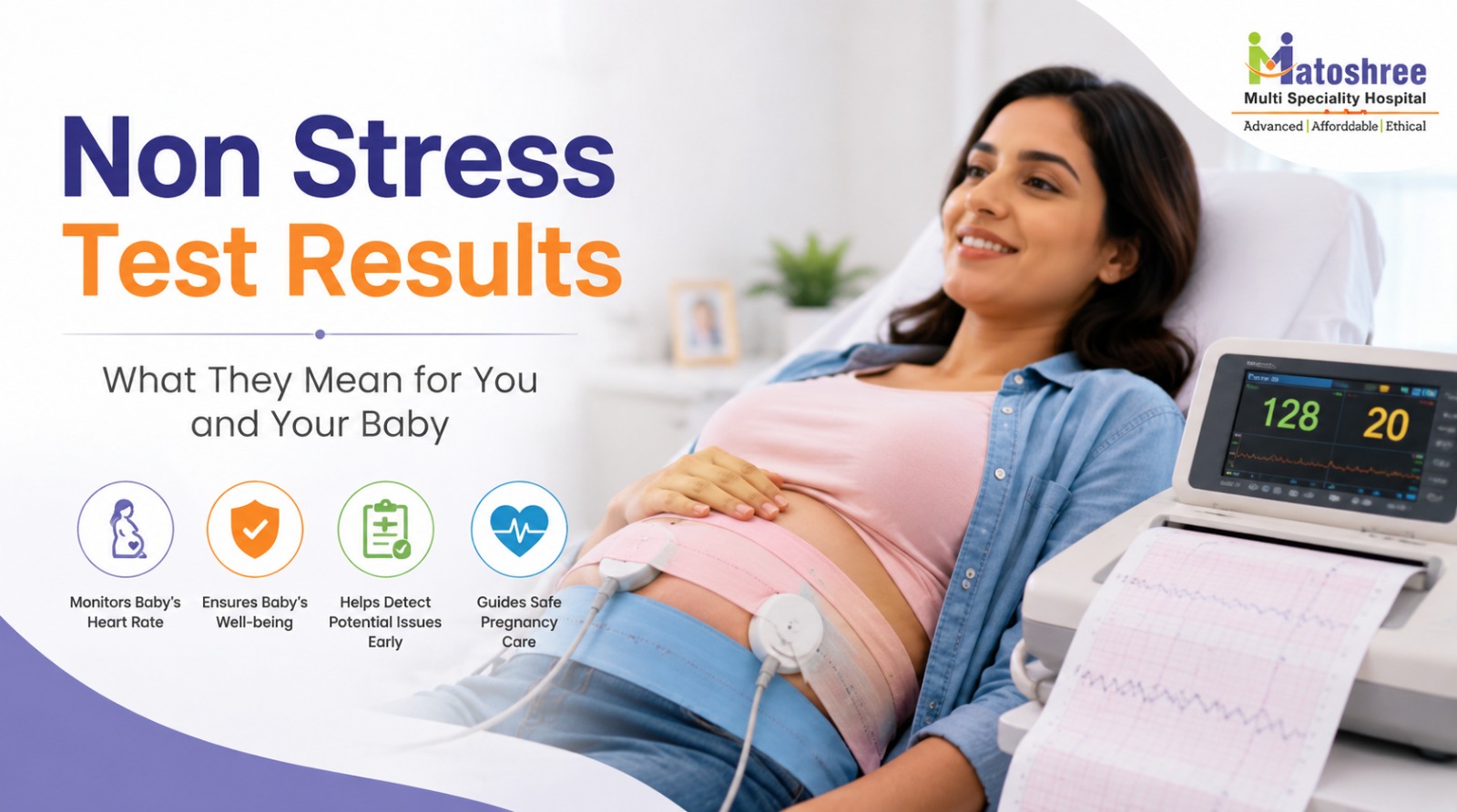
Non Stress Test Results: Everything You Need to Know About the NST Test During Pregnancy
Pregnancy is a wonderful journey with milestones, check-ups and other prenatal tests that monitor your baby's health. The Non Stress Test in Pregnancy (NST Test) is one of the more common fetal monitoring tests done in the third trimester of pregnancy.
When your doctor suggests an NST Test you may have questions about what it is, why it is recommended, how the test works and what your Non Stress Test Results mean. Being familiar with this crucial prenatal evaluation can help reduce anxiety and help you plan your next steps for prenatal care.
The full form of NST is Non Stress Test during pregnancy. Easy, painless and non-invasive and monitors the baby's heart rate and movements. The test is to help determine whether your baby receives adequate oxygen and is normally responsive in the womb.
We will explore the purpose of the NST, how it's performed, what the results mean, the benefits of an NST, potential risks and limitations, and frequently asked questions.
What Is the NST Test?
In the medical field, the full form of NST is Non Stress Test. It is a prenatal screening test that checks your baby's heart rate, but does not cause stress to the mother or baby.
Another full form of NST in pregnancy is Non Stress Test, which will highlight the fact that the test is completely painless and non-invasive. The NST is different from other prenatal tests, because it does not require medications or uterine contractions, but only a baby's natural movements.
A baby's heart rate will speed up a bit when it moves, during a healthy pregnancy. These changes are recorded on the NST Test with electronic fetal monitoring equipment. A heart rate response is good if it responds appropriately, which means that the baby is getting normal oxygen and that the nervous system is developing normally.
A Non Stress Test in Pregnancy is generally conducted after 28 to 32 weeks of pregnancy when the patterns of the fetal heart rate become more reliable.
Why is a Non Stress Test Performed?
Non Stress Test is recommended in Pregnancy to monitor the condition of the baby to help identify early signs that the baby is not getting sufficient oxygen.
An NST Test might be suggested if:
- You are at risk for having a pregnancy.
- Your baby does not move around as he or she should.
- Your baby's due date has passed.
- You are pregnant and have diabetes.
- You have high blood pressure (or high blood pressure during pregnancy).
- You have preeclampsia.
- Your baby is underweight.
- You are carrying twins or multiple babies.
- The amount of amniotic fluid is reduced.
- You have had difficulties with pregnancy before.
- Your doctor thinks that your baby is not growing normally.
- You have medical conditions related to your mother, for example kidney disease, or autoimmune conditions.
An NST Test is utilized to monitor the pregnancy regularly and assist the doctor to decide when to go for delivery.
When is an NST Test Recommended?
An NST Test could be recommended by a health care provider during the third trimester if there are concerns about your baby's health.
Common situations include:
- Decreased fetal movements
- Pregnancy beyond 40 weeks
- High-risk pregnancy
- Gestational diabetes
- High blood pressure
- Previous stillbirth
- Placental problems
- Growth restriction
- Rh incompatibility
- Maternal heart disease
- Kidney disease
- Autoimmune disorders
Depending on a woman's pregnancy, some may need weekly NSTs, others may need two per week.
How Is the NST Test Performed?
The Non Stress Test in Pregnancy is one of the simplest prenatal procedures, and typically requires only 20-40 minutes.
Step 1: Preparation
You will be made to lie down in a reclining chair or examination bed in a comfortable position.
Step 2: Preparing for the Test
There are two elastic bands on the belly.
Step 3: Placing the Sensors
Two sensors are used: one to monitor your baby's heartbeat and the other to monitor your baby's uterine activity.
Once the baby has started to move, parents should keep track of their movements.
A button for pressing on hand may be given when you sense your baby moving.
Step 4: Recording the Heart Rate
The machine continuously records the baby's heart rate during movements.
If the baby is asleep, the test can be repeated in another 20 minutes until movement is detected.
What is the best way to prepare for an NST Test?
There's really not much to do to prepare for the NST Test.
Before your appointment:
- Have a small meal or snack.
- Stay hydrated.
- Wear loose-fitting clothes.
- Empty your bladder.
- Avoid smoking.
- Let your doctor know if you are taking any medicines.
Some mothers will find their babies moving more when they eat, which can make it move through the test faster.
The understanding of the results from Non Stress Tests
One of the most frequently asked questions by pregnant women is, “What is my Non Stress Test Results?”
Once your doctor has performed the NST Test, he or she will take time to examine the fetal heart rate tracing. The results are typically considered reactive or non-reactive.
Reactive NST Result
A Reactive NST will be regarded as a reassuring and normal result.
It means that your baby's heart rate raises in an adequate way during movement.
At term (32 weeks or later), physicians will search for:
- A minimum of 2 heart rate accelerations
- An increase in the number of beats per minute by at least 15 beats per minute.
- At least one acceleration within 20 minutes that is 15 seconds or longer.
A reactive NST will normally mean that your baby is getting oxygenated blood and is in good condition.
Non-Reactive NST Results
If the heart rate did not demonstrate the normal accelerations during the monitoring period, it is a Non-Reactive NST.
If your baby's test comes back negative, that doesn't necessarily mean he or she is safe.
Possible reasons include:
- Baby is sleeping
- Early gestational age
- Maternal medications
- Reduced fetal activity
- Temporary fetal sleep cycle
Your doctor might want to continue the monitoring period, or test more.
What happens after a Non-Reactive NST?
Your healthcare provider might suggest additional testing if your NST doesn't change.
Biophysical Profile (BPP)
This is an NST along with an ultrasound assessment for the following:
- Baby's breathing movements
- Body movements
- Muscle tone
- Amniotic fluid volume
- Heart rate
Contraction Stress Test (CST)
A CST tests your baby's heart rate when he or she experiences moderate uterine contractions.
Doppler Ultrasound
A Doppler ultrasound monitors blood flow between the placenta and baby to detect flow issues.
During an NST test, normal baby heart rate is determined to be between 110 and 160 beats per minute.
The normal fetal heart rate is between:
110 to 160 beats per minute
Temporary elevations during motion are regarded as good.
Advantages of the NST Test.
There are several benefits to Non Stress Test in Pregnancy:
- Completely non-invasive
- The breast pump is safe for mother and baby.
- No radiation exposure
- Painless procedure
- Quick results
- Identifies the presence of fetal distress at an early stage
- Assists physicians in the care of high-risk pregnancies
- Allows prompt medical decisions to be made
Is there anything that might be dangerous?
The NST Test is deemed to be very safe.
No safety concerns have been reported with electronic fetal monitoring.
The procedure itself is safe for the baby, although some moms may get a little sore from lying in one position for a long time.
Are the NST tests accurate?
The NST Test is a great screening test, but not definitive.
A non-reactive NST is not indicative of further evaluation, whereas a reactive NST is very reassuring. Many of the non-reactive results are due to the baby being asleep, not to a medical condition.
When to call your doctor?
If you see any of the following, seek immediate medical attention:
- Reduced fetal movement
- Vaginal bleeding
- Leakage of amniotic fluid (AFI)
- Severe abdominal pain
- Persistent contractions
- Severe headache
- Blurred vision
- Swelling of the face and/or hands.
- High fever
Early assessment and care ensures the safety of mother and baby.


 Panvel
 Kamothe