
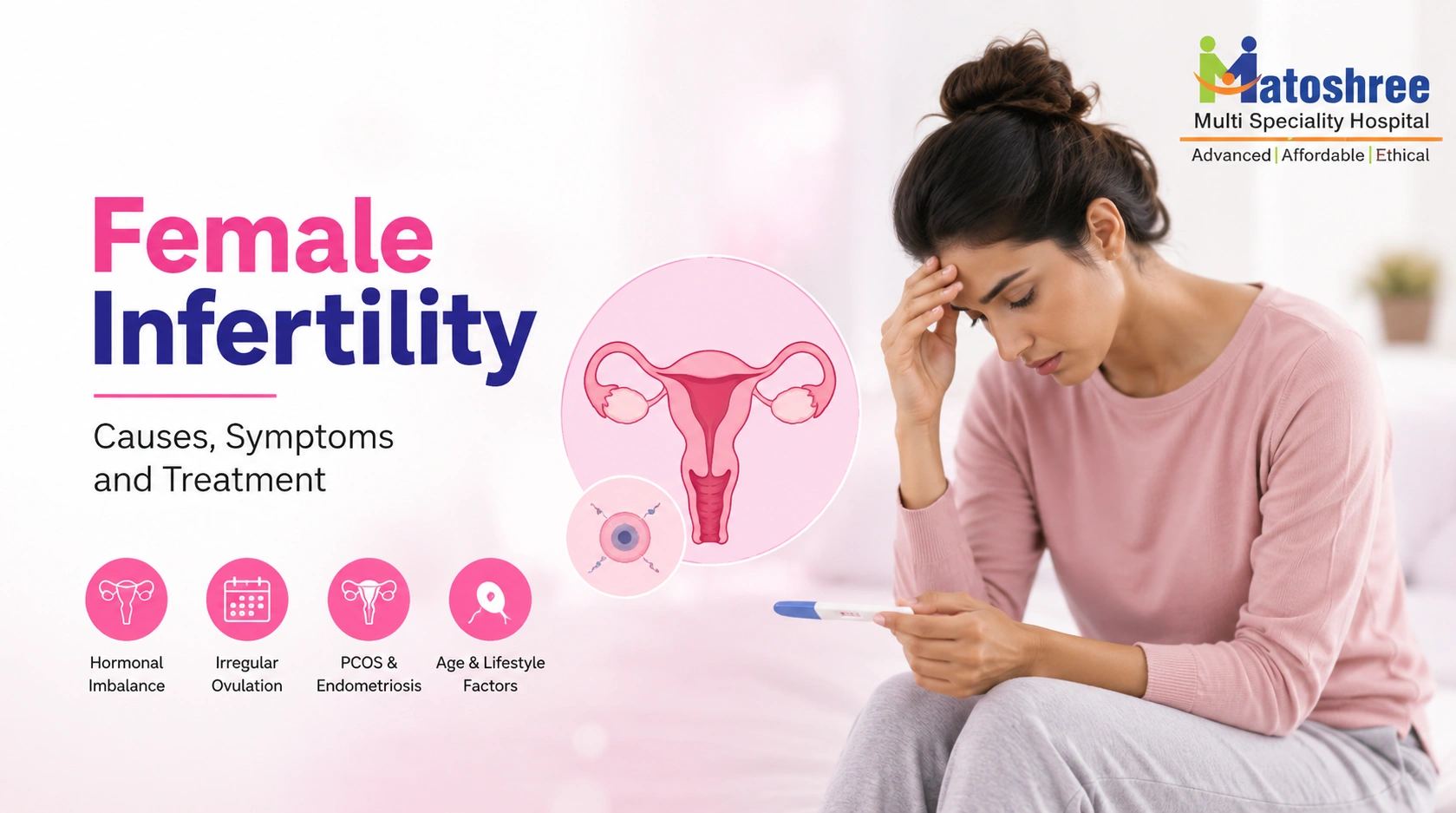
Female Infertility: Signs, Symptoms, Causes, Diagnosis and Treatment
It takes an emotional toll on both men and women to try for a baby, especially when pregnancy fails to occur despite regular and unprotected sexual intercourse. There may be a variety of factors that lead to female infertility, including ovulation issues, hormone imbalance, fallopian tube damage, uterine dysfunction, ovarian failure or other reproductive complications. Male infertility also may be associated with fertility problems; therefore both partners may require evaluation.
Having information about the signs of infertility, understanding infertility symptoms and knowing when to seek professional help will help to make it easier to identify potential infertility problems and start the appropriate treatment.
Why is Female Infertility a problem?
Women are said to have a problem with their fertility when they cannot get pregnant even when they have regular unprotected sexual intercourse. Female causes, male causes, mixed causes and sometimes no identifiable cause may result in infertility.
For women less than 35 years old, it is generally recommended that they undergo fertility testing after 12 months of unsuccessful efforts to conceive. Evaluation is generally recommended after 6 months for women older than age 35 and earlier for women older than age 40.
What are the symptoms of Infertility?
Difficulty in getting pregnant despite regular, unprotected sexual activity is one of the most crucial symptoms of infertility. But not every time does there appear any physical symptoms of infertility.
Possible signs that may indicate a problem with fertility include:
- Irregular menstrual cycles
- Menstrual cycles that are either much longer or much shorter than usual
- Missing periods
- Painful periods
The symptoms of PCOS are:
- Pelvic pain
- A medical history of endometriosis.
- Any previous infection of the pelvis or surgery on the reproductive organs.
- Repeated miscarriages
- Inability to conceive despite frequent efforts to conceive
Remember also that not all fertility issues are the woman's. Male infertility may be a factor in the inability to conceive and should be taken into account in assessing fertility.
How Do You Know if you are Infertile?
It is important to remember that when discussing infertility symptoms, that not all symptoms of infertility will be evident.
This is often the most obvious symptom, which is not being able to conceive. Some women may have symptoms from an underlying condition associated with infertility instead of the symptoms of infertility.
The symptoms and/or signs may be:
- Abnormal or missed periods
- Period or Cycle changes
- Pelvic discomfort
- Facial or body hair that is growing too much
- Acne
- Possible symptoms of hormonal imbalance
Likewise, a man with an infertile testicle might not display any symptoms. In some men, there is no apparent reason other than the inability to get the woman pregnant.
A guide to identify whether you're infertile or not.
There's no single at home symptom or test to confirm infertility, and many people are looking for signs of infertility.
If you have been trying without success you can get advice from a fertility expert to assess the problem with both partners and determine the cause of the problem.
Fertility evaluation might involve:
- Medical history and medical history regarding menstruation.
- Physical examination
- Ovulation assessment
- Hormonal blood tests
- Pelvic Ultrasound or Transvaginal Ultrasound
- If indicated at the right time, ovarian reserve testing can be done.
- Fallopian tube evaluation
- Evaluation of the uterus
- Semen analysis of the male partner (if applicable)
Semen analysis is one of the key steps in the evaluation of potential causes of male infertility and female fertility testing can involve testing for ovulation, ovarian reserve, fallopian tubes and the uterus.
Women and men need to both take responsibility for making babies.When women and men don't make babies together, both are involved in female and male infertility.
Female infertility is not the only reason for trouble conceiving. There are difficulties with the production of sperm, its movement, its shape, and other reproductive factors that may be associated with male infertility.
For this reason, often both partners are evaluated for fertility. Both partners can be tested to help doctors be more efficient in finding the underlying cause and giving an appropriate treatment plan.
The following are the most common causes of female infertility.
Female infertility could have multiple causes.
1. Ovulation Problems
Sometimes the egg is not released on a regular basis, which can be caused by ovulation disorders. Hormonal issues, such as PCOS, thyroid and elevated prolactin can affect ovulation.
2. Blocked Fallopian Tubes
A blocked or damaged Fallopian tube can block the meeting of a sperm and an egg. Tubal issues may be caused by previous infections in the pelvis, pelvic inflammatory disease or some surgeries.
3. Endometriosis
In some women, the tissue that lines the uterus also develops in other parts of the body.In women with endometriosis, tissue that lines the uterus also forms outside the uterus. May involve the ovary, fallopian tubes and other reproductive organs and may be associated with impaired fertility.
4. Uterine Problems
Sometimes, fibroids, polyps or structural abnormalities of the uterus may impact implantation or pregnancy.
5. Reduced Ovarian Reserve
The production of eggs may be affected as a result of ageing. The fertility of women is likely to diminish as they get older, especially after age 35.
6. Primary Ovarian Insufficiency
Primary ovarian insufficiency is when ovaries do not function normally before age 40. This condition may be accompanied by irregular or missed periods, and problems with getting pregnant.
Why are men infertile?
This article is geared toward female infertility, but knowledge of male infertility is a necessary component as it can be a part of fertility issues.
Some of the possible reasons for male sterility are:
- Low sperm count
- Poor sperm movement
- Abnormal sperm shape
- A reduced production of sperm.
- Hormonal disorders
- Certain infections
- Varicocele
- Prior reproductive surgery or trauma has been excluded.
- Some medicines and diseases
- Lifestyle and environmental factors are the greatest risk factors.
If you think a man is having trouble getting or keeping an erection, or if he has trouble with his sperm, a semen analysis is a common test that becomes part of the evaluation.
What is the diagnosis for Infertility?
A full history and physical examination is typically the first step in an evaluation for infertility. Different tests may be suggested based on the age of the couple, symptoms, medical history, and length of time they have been trying for a child.
For women, tests might include:
- Ovulation testing
- Hormonal blood tests
- Ultrasound
- Ovarian reserve assessment
- Fallopian tube evaluation
- Uterine evaluation
Examination for men may involve:
- Medical history
- Physical examination
- Semen analysis
- Hormonal testing as appropriate.Hormone testing as appropriate.
If necessary, further investigations will take place.
Male and female evaluation can offer a comprehensive approach to an understanding of fertility.
When to see a fertility specialist?
Talk to your fertility specialist if:
- Are under 35, and have been trying to conceive for 12 months without success.
- Age is 35 or older and you have not been able to conceive after 6 months.
- You are more than 40 years old, and you want to get pregnant.
- You don't have a period or it occurs very irregularly.
- You have severe or painful periods.
- Have a history of PCOS or endometriosis.
- Pelvic infections or reproductive surgery have been a problem in the past.
- You have had multiple miscarriages.
- Your husband is suspected of having a fertility issue or he may have been diagnosed with male factor infertility.
However, if there are known fertility concerns, evaluation earlier may be suggested.
The treatment for female infertility is quite diverse.
Treatment is dependent on the cause of the case, age, fertility history and other individual factors.
Lifestyle and Medical Management
Taking care of some health and hormonal issues can help to improve reproductive health and ovulation.
Ovulation Induction
For women who do not have regular ovulation, medications can be administered to stimulate ovulation.
Intrauterine Insemination
In some cases, prepared sperm may be placed directly into the uterus around the time of ovulation (IUI) may be appropriate.
Surgery
Sometimes surgical interventions may be necessary for certain uterine, fallopian tube or endometriosis conditions.
IVF Treatment
In vitro fertilization (IVF) is a procedure that removes eggs, places them in a laboratory, fertilizes them with sperm and places the embryo in the uterus. Depending on the cause of infertility, and individual circumstances, IVF may be recommended, including in some cases of male infertility.
Choosing an Infertility Centre in Panvel
When choosing an infertility centre in Panvel, you should find the fertility care provider that provides extensive infertility evaluation for both male and female factors.
An ideal fertility consult should be geared towards determining the cause of the fertility problem and not just suggesting a treatment. Evaluation for male and female infertility can assist physicians to tailor a fertility treatment plan for the individual, including understanding the IVF process step by step when IVF treatment is recommended.
Is there any way to prevent infertility?
However, not all causes of infertile can be prevented. But healthy living, refraining from tobacco use, and controlling some health risks and working with your doctor when you need to may help support reproductive health.
When planning pregnancy, women and men can talk with their health care provider about any medical conditions, medicines and lifestyle issues.
Final Thoughts
Knowing what to look for and what to watch for can help you know when to seek professional help for infertility. But many people who have trouble getting pregnant don't have any symptoms, and many people find no symptoms even though they have trouble getting pregnant.
When it comes to infertile vs non-infertile, the best way to determine is to see a qualified gynecologist or fertility expert for a proper assessment of your fertility.
Fertility problems can affect both partners, hence it is necessary to look at female infertility and male infertility.
Couples should consider seeking an evaluation at an early stage if they are seeking an infertility centre in Panvel; this can reveal possible fertility issues and give them the information they need about what can be done.
Frequently Asked Questions
1. What are the signs of infertility in females?
Possible signs include irregular or absent periods, very long or short menstrual cycles, painful periods and difficulty becoming pregnant. However, many women with infertility have no obvious symptoms.
2. What are the main infertility symptoms?
The main indication is difficulty becoming pregnant. Underlying conditions may cause symptoms such as irregular periods, pelvic pain or hormonal changes.
3. How to know if you're infertile?
You cannot reliably determine infertility based only on symptoms. A fertility evaluation involving medical history, ovulation assessment and other appropriate tests can help identify possible causes.
4. Can male infertility affect pregnancy?
Yes. Male infertility can contribute to difficulty conceiving. Sperm count, movement, shape and other male reproductive factors may affect the ability to achieve pregnancy.
5. Should both partners be tested for infertility?
Yes. Fertility difficulties can involve female factors, male infertility, or both. Evaluating both partners can provide a more complete understanding of the situation.
6. When should I get tested for infertility?
Women under 35 are generally advised to seek evaluation after 12 months of trying, while women aged 35 or older should consider evaluation after six months. Women over 40 may benefit from earlier assessment.
7. Is female infertility treatable?
Many causes of female infertility can be managed with medication, lifestyle changes, surgery, IUI or IVF depending on the underlying cause.



 Panvel
 Kamothe