
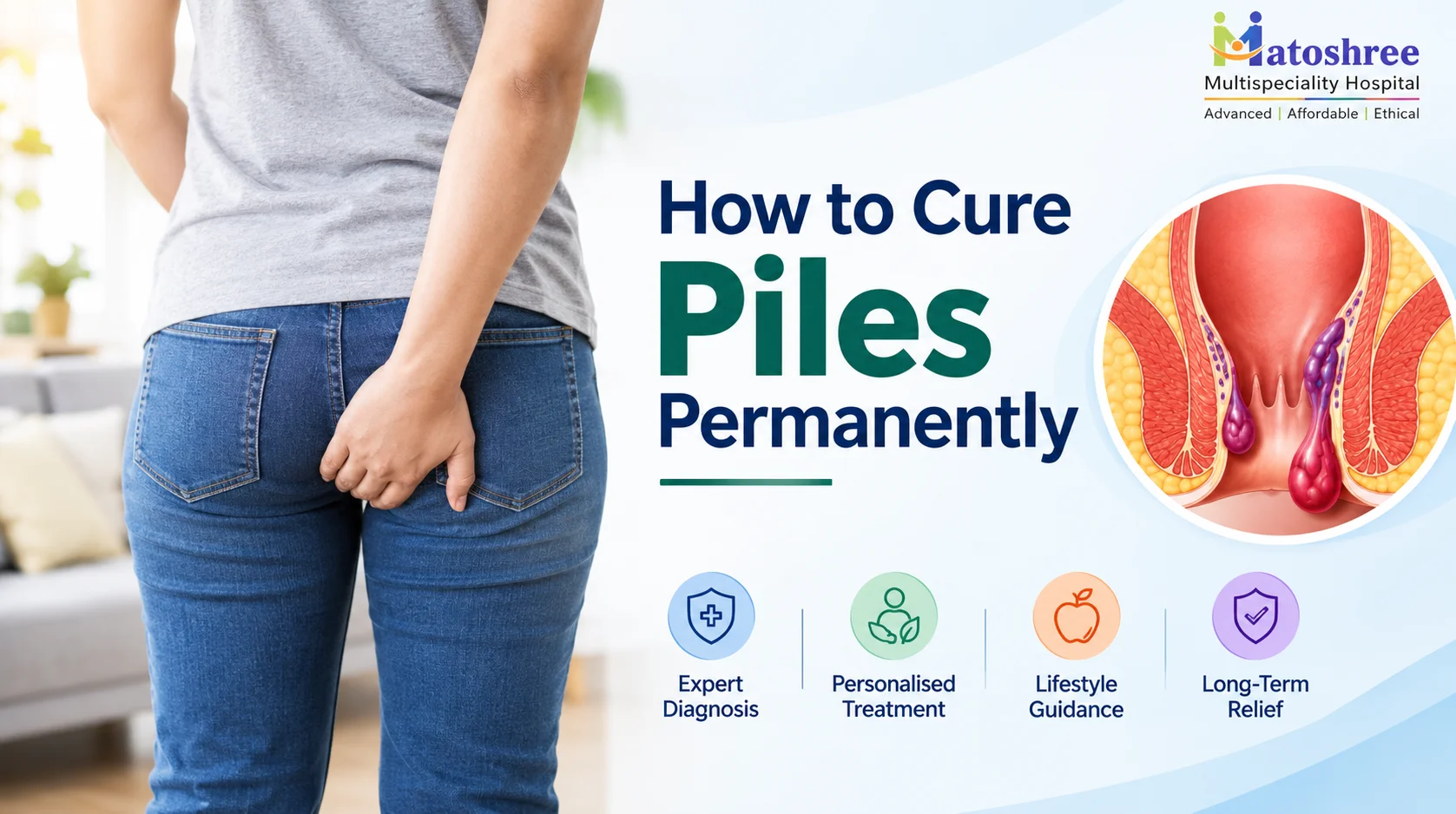
How to Cure Piles Permanently: Symptoms, Causes, Treatment & Prevention
Hemorrhoids or piles are enlarged veins in and around the lower rectum and anus. They can lead to symptoms like bleeding, itching, pain, swelling and discomfort during defecation. Piles are a common occurrence, but if they occur repeatedly, consult a piles doctor in Panvel and do not overlook them.
When you're looking for how to get rid of piles for good, the best way is to understand the type, severity and cause of the piles. Sometimes a change in lifestyle and diet will help make mild piles less uncomfortable and not as painful; sometimes medicines or medical procedures are needed to help ease persistent or advanced piles.
This guide describes symptoms, the causes, treatment options, foods to avoid, home-care measures and when to seek medical attention.
What Are Piles?
Piles are enlarged or swollen blood vessels that develop inside the rectum or around the anus. These are often linked with constipation, straining while defecating, sitting for extended periods of time, pregnancy, obesity, and low dietary fibre intake.
There are two types of piles – internal piles as well as external piles.
Internal piles: These form within the rectum and might bleed without causing any symptoms.
External piles: Piles that form under the skin around the anus can be painful, swollen or itchy.
Thrombosed piles: When a blood clot forms in the external hemorrhoid, which can be very painful and cause swelling.
It is helpful to know the kind and severity of the piles to choose a treatment for them.
Common Piles Symptoms
The symptoms of piles can vary from one person to another, depending on their size and location.
Common symptoms include:
- Bright red blood, in the stool or at the time of defecation
- Pain or discomfort around the anus
- Itching and irritation
- A bulging area around the rectum and anus.
- A bump around the area of the anus
- Mucus discharge
- Discomfort while sitting
- Strangely or painfully difficult or painful defecation
- A sensation of not emptying the bowel completely.
Do not take any bleeding from the rectum for granted to be a sign of piles. If bleeding does not stop or is not known to have stopped, it should be checked by a health care provider.
What Causes Piles?
The veins around rectum and anus can be made taut by a number of things.
Common Causes of Piles
- Chronic constipation
- Stranging on stooling
- Low-fibre diet
- Insufficient water intake
- Prolonged sitting
- Using the toilet too much
- Frequent diarrhea
- Pregnancy and childbirth
- Obesity or over weight.
- Inadequate exercise.
- Regular heavy lifting
Taking these factors into consideration can help minimize symptoms, and decrease the chances of a recurrence of piles.
How to Cure Piles Permanently?
No single treatment is effective for everyone with piles. Long-term treatment depends on treatment of the underlying cause and treatment based on severity of the condition.
In mild cases, bowel management, plenty of fluids, fibre and avoiding straining may offer a lot of relief.
For more persistent or advanced piles a doctor may recommend a procedure or medical treatment.
1. Eat more fibre
A high fibre diet will soften stools and make them easier to pass. This can help to prevent constipation and straining—both of which are potential contributing factors to piles.
Eat foods like:
- Fruits
- Vegetables
- Whole grains
- Oats
- Beans and legumes
- Foods high in fibre, including seeds.
Slowly add fibre to the diet and consume large amounts of fluids.
2. Drink Enough Water
Maintain a good fluid intake to avoid constipation and faecal difficulty.
Avoid waiting until you are thirsty, drink fluids regularly for the day, depending on your own needs and medical advice.
3. Don't strain when you go to the bathroom.
When straining, pressure is placed on the blood vessels around the anus.
Try to:
- When you have a need to go to the toilet, make sure to do so.
- Don't spend more time sitting on the toilet.
- Never push, do not force to defecate.
- Try to work on preventing constipation.
4. Exercise Regularly
Regular exercise is very important to a properly functioning digestive system and bowel movements. Walking and other appropriate exercise can be done as part of your day to day routine.
If you cannot exercise for some other medical reason or physical disability, consult your health care provider as to what kind of exercise you should undertake.
5. Warm Sitz Baths
Soaking in a warm bath (sitz bath) may be helpful to reduce the irritation, discomfort or itching in the anal area.
But it mainly offers relief from the symptoms and is not a long-term solution to all piles.
Medical Treatment for Piles
If lifestyle modifications aren't enough, a doctor may prescribe treatment depending on the symptoms and severity of piles.
The treatment options include:
Medicines
Medications may be prescribed to relieve pain, itching, inflammation, constipation or hard stools depending on symptoms.
Ointment for Piles
A doctor may prescribe medication that can ease symptoms like itching, pain, irritation and swelling due to piles.
The ingredients vary from product to product, so it is better to follow medical advice than to select a product just because of the symptoms.
Stool Softeners
If someone is constipated, their health care provider may suggest actions or medications that will help the person defecate more easily and with less straining.
Surgery and procedures for piles.
In severe, frequent or poorly responsive piles, a procedure may be recommended by a doctor.
Treatments may range from:
- Rubber band ligation
- Sclerotherapy
- Infrared coagulation
- Hemorrhoidectomy
A wide range of other minimally invasive procedures are available.
Treatment will vary depending on the person's diagnosis. Surgery isn't needed for all people with piles.
When is Piles Surgery Needed?
A procedure is a possible option when:
- Conservative treatment fails to relieve symptoms.
- Piles repeatedly return.
- There is significant bleeding.
- Persistent symptoms are caused by prolapsing piles.
- The piles are advanced or very symptomatic.
Once examined, a specialist will be able to decide whether a procedure is suitable or not.
The foods that you should avoid when suffering from piles:
Eating habits can be a key factor in avoiding constipation and regular bowel movements.
In some, certain foods can exacerbate the digestive symptoms or cause constipation.
Consider limiting:
- Highly processed foods
- Low-fibre foods
- Excessively fried foods
- Foods that aggravate symptoms – very spicy foods.
- Excessive alcohol
- Any foods that cause personal stomach upset or constipation.
Rather, emphasize a diet that's rich in fibre, vegetables, fruits, whole grains and fluids.
Do you need surgery for Piles?
If there are other factors that are contributing to the mild piles, such as constipation or straining, then those can be treated with home remedies for piles, and the piles may improve without the need for surgery.
The treatment results, however, will vary depending on the type and extent of hemorrhoids. Advanced or persistent piles may require a medical procedure.
However, looking for a home remedy for piles alone might be inadequate if they are persistent or more serious.
What to do to prevent piles from returning?
After symptoms clear up, a healthy bowel program will help decrease the risk of recurrence.
Follow these habits:
- Increase the amount of dietary fiber consumed.
- Drink adequate fluids.
- Exercise regularly.
- Avoid excessive straining.
- Avoid procrastination when going to the bathroom.
- Don't waste time on the toilet.
- Keep a healthy weight.
- Address constipation early.
- If bleeding continues or lasts for a long time, consult a physician.
When to see a doctor?
If you have any of the following symptoms, please see your doctor:
- Persistent rectal bleeding
- An increasing or severe anal pain
- An anal area with a lump that causes pain.
- Chronic piles (piles that come back repeatedly)
- Symptoms that don't respond to self-care
- Diarrhoea or constipation.
- Weight loss that is not explained and/or other worrying symptoms
While hemorrhoids are the most common cause of rectal bleeding, other causes should be evaluated.
Conclusion
The first step to understanding how to cure piles permanently is to know the cause of it and its seriousness. Making dietary changes, eating more fiber and fluid, avoiding constipation and straining, and getting regular exercise will help control mild piles and prevent them from reoccurring.
If symptoms do not improve or worsen, it is important to have the condition professionally assessed. Treatment can include medication, minimally invasive procedures or surgery depending on the diagnosis.
If you are able to diagnose and treat your piles early, you can manage them successfully and get your digestive and bowel movements on track again in the long run.


 Panvel
 Kamothe